
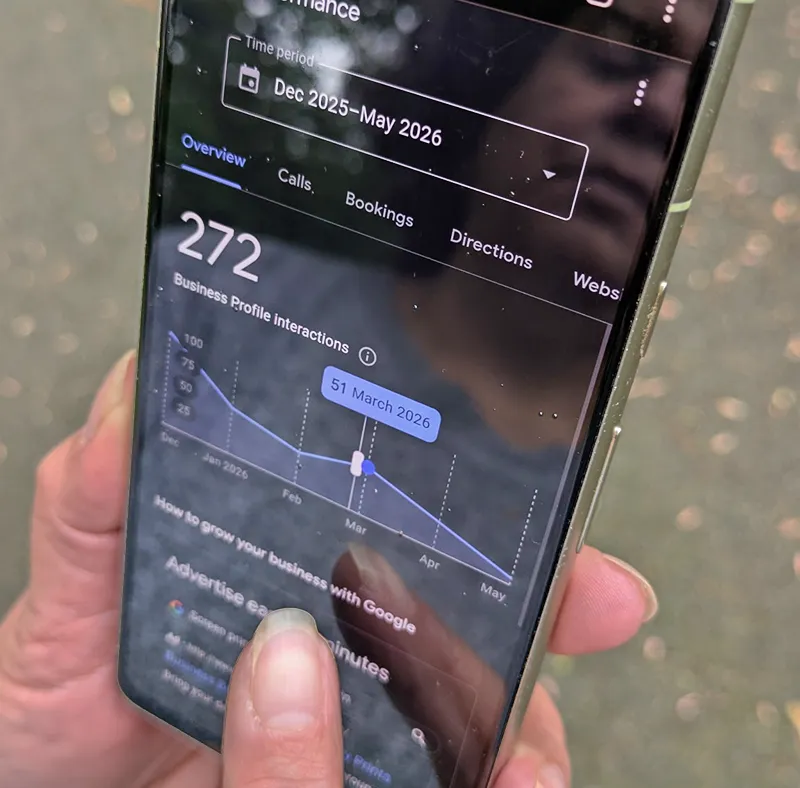
We’ll admit it. For a stretch of 2024 and into early 2025, we were posting to our own Google Business Profile and feeling pretty good about it. Consistent posts. Decent-looking graphics repurposed from the Instagram posts we spent a ton of time on. Carefully crafted brand templates. Relevant topics. We crossed every ‘t’ and dotted every ‘i’. We did it all. What could possibly go wrong?
Then we looked at the data. One interaction per month? Not one hundred? One. As in, a single person clicked something across thirty days of activity.
That stung. Especially since we'd been quietly recommending Google Business Profile (GBP) posting to our own clients because we know that it’s generally a worthwhile, low-cost effort.
So we dug in. What we found was both humbling and genuinely useful — useful enough that we wanted to share it here, because several local businesses we work with were making the exact same mistakes.
What we were doing wrong
The posts looked very nice. That was part of the problem. We were taking polished Instagram graphics — the kind of static, designed-for-scrolling visual that performs reasonably well on social — and dropping them onto GBP with copy like this:
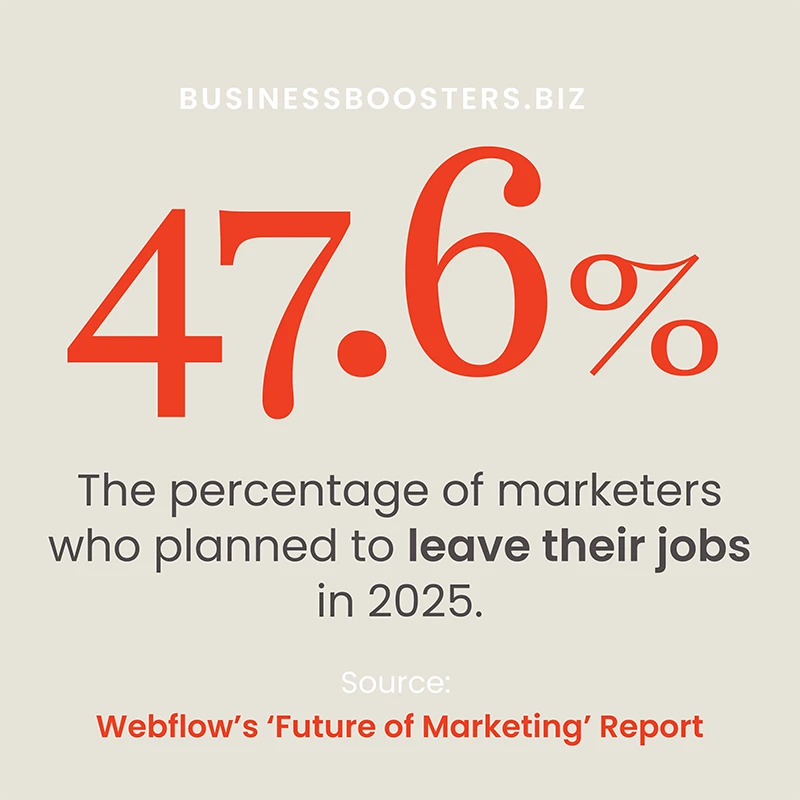
Here's the thing about Google Business Profile that's easy to miss: it is not Instagram. It is not Facebook. People who find your GBP listing are not passively scrolling a feed — they are actively looking for a business, often right now, often nearby. The content that performs there is fundamentally different from social. It needs to feel local, specific, and current. Not polished, real.
What does Google reward most on GBP? Location signals and video. At the time we had zero of both types of content.
What we changed
As a test to reverse our ‘flatline’, about four months ago we shifted our approach. Instead of repurposing social graphics, we started creating content specific to where we actually work — real locations, real context, real moments.
One post featured a photo taken at a client's workplace at a corporate park in Berkeley Heights New Jersey with copy speaking directly to businesses in the surrounding Park Corporate Campus in Union County. Another was a short video from our workstation in Secaucus, showing the start of a branding strategy session for a North Jersey client. Neither was polished, they were off the cuff and almost rough when compared to our Instagram posts. Both were specific and honest about where we were and what we were doing.
The results were not subtle.
Fourteen meaningful local actions in a single month versus one. That's what three posts with real location content and short video did — not over a year, but in about ninety days.
"Google Business Profile is not Instagram. The people who find you there aren't scrolling. They're looking. The content that works reflects that difference."
Why this matters more for our clients than for us
We have to be upfront about something else. We don’t care that much about our GBP. We're a design and branding agency. We work with companies across the country and, increasingly, outside the US. A 600% increase in local North Jersey engagement is meaningful to us, but it's not the same kind of lifeline it would be for a truly local business.
Just think about real local businesses for a moment. These are your medi spas, veterinary clinics, plumbers, dentists, and wedding ensembles. For these businesses, every single lead needs to come from within about an hour's drive or so, or the lead simply doesn't happen. For businesses like these, local search visibility isn't a marketing tactic. It's the whole game.
The lesson from our own profile is now something we can speak to from direct experience rather than just professional advice — and the format matters enormously.
One more thing worth knowing for 2026
Something has changed this year that makes all of this more urgent. Google's AI — which now powers AI Overviews and Gemini results — pulls data from your connected social networks to confirm that your business is active and legitimate.
When you link your Facebook, Instagram, LinkedIn, or YouTube pages to your GBP, you're giving Google extra proof points that you are a real, engaged business operating in a real place.
In plain terms: your profiles don't live in isolation anymore. They talk to each other, and Google is listening. A quiet Google Business Profile combined with inactive social profiles is a signal that something may have changed — and Google responds by showing you less, not more.
What actually works — and what doesn't
- Short video — your team, your location, work in progress
- Photos with real location context, not stock imagery
- Hyper-local copy that names the towns and neighborhoods your customers recognize
- Repurposed YouTube content — Google owns YouTube and weights it accordingly
- Review responses — even a brief thank-you signals an active, attended listing
- Consistent NAP (name, address, phone) across GBP, Bing Places, and Yelp
- Linked social profiles — Facebook, Instagram, LinkedIn, YouTube — to confirm activity to Google's AI
- Repurposed social graphics designed for passive scrolling
- Generic stock photos with brand-forward copy
- Posts that could belong to any business in any location (lookout AI!)
- Sporadic activity after long gaps — Google notices the silence
- Inconsistent business info across platforms — even "St." vs "Street" chips away at trust
What about Bing and Yelp?
As a business we manage Yelp and Bing profiles in addition to Google but Google is where the real leverage is. Roughly 90% of US search happens with the Google platform but Bing and Yelp are worth a mention.
Bing Places
More relevant than most businesses assume. Bing powers search on all Windows devices and handles a meaningful share of voice queries. It has a direct import tool that pulls your Google listing in. Worth doing, the interface is a bit cumbersome (and you know we’d love to redesign it) — low maintenance once set up.
Yelp
Yelp's value is in reviews, not posting schedules. We did tests with Yelp also and there are ways to show at the top of your listing category with a non-paid account but that's a story for another day. A strong Yelp presence can outrank your own website for local service searches but it can cost you and at times the company can feel more than a bit pushy. Claim it, complete it, respond to reviews. That's the job — not maintaining a content calendar.
Our recommended approach
If you're already posting anywhere — Facebook, Instagram, YouTube — you're most of the way to a GBP strategy. The content exists. What changes is the intent: instead of repurposing social content as-is, take sixty seconds to make it specific. Name a location. Add a real photo from where you actually are. If you have video, use it.
We didn't fully crack our own GBP strategy until we started testing what worked along with treating it as its own channel rather than a distribution outlet for content built elsewhere. Once we did, the difference showed up in the data within a quarter.
For any business that depends on local leads, that's a quarter worth paying attention to.
Google's official GBP playbooks — grab yours free
As part of National Small Business Week 2026, Google released industry-specific GBP Playbooks — step-by-step PDFs tailored to how different businesses actually operate. These are directly from Google, free, and genuinely useful. The service-based business playbook is the most relevant for most of our small business clients.
• For service-based businesses
If you have e a plumbimg business, a dry cleaners, contractor, personal assistant, and other local service providers. This covers the full customer journey from first search to booking.
• General GBP best practices for all business types
This is Google's 'Universal GBP guidance' covering every business type — including information on working with categories, photos, posts, reviews, and the fields most businesses leave incomplete.
Google has also released vertical-specific playbooks for restaurants, hotels, and other categories. If your industry isn't covered above, check Google's Business Profile Help Center for the full list.
Want a second set of eyes on your GBP strategy?
We work with local businesses in the New York Metro area and nationwide to help our customers build local search presence that actually converts. Whether it's a full GBP management plan or just a content audit, we're happy to take a look at where your business stands.


